One brand across changing digital contexts.
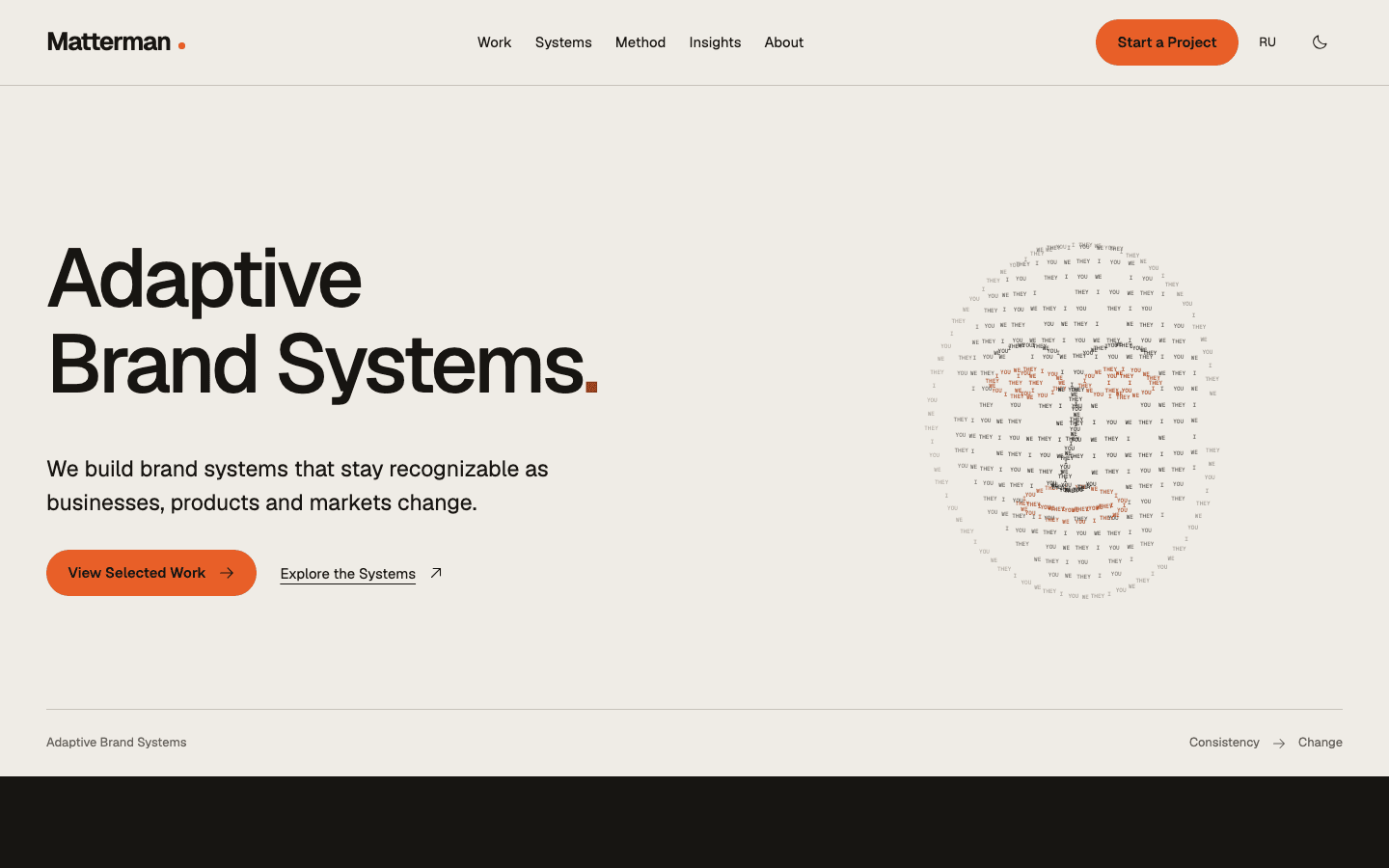
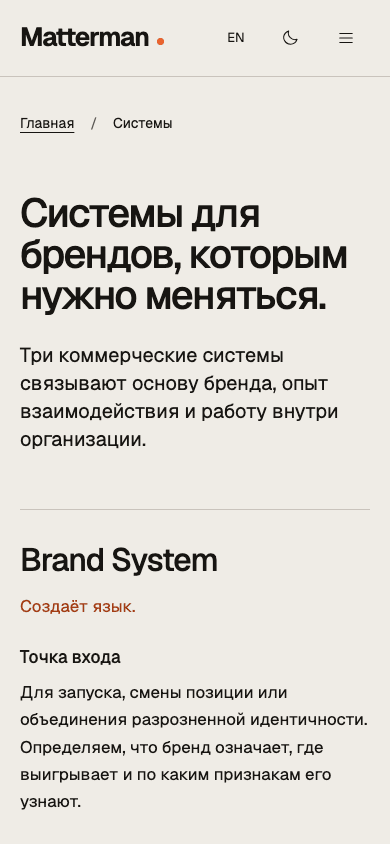
Matterman’s own website connects brand language with variation in format, screen size and interface theme.
Matterman · Own system · Own system
The context
The website needed to explain Adaptive Brand Systems while demonstrating the principle through its own behaviour. The category, method and commercial systems had to remain distinct and easy to find.
What was changing
Different screens, content lengths and interface states create different layout demands. The design needed to accommodate those demands without creating a separate visual identity for each context.
What needed to stay true
A brand should be able to change without losing recognition. The approved names and the relationship between category, method and commercial systems formed the strategic constants.
The strategic choice
Matterman is presented through Adaptive Brand Systems. Capabilities support three commercial systems, each connected to a business problem and an intended outcome.
The recognizable language
Shared type, mineral surfaces, orange accents and an optical code establish the visual language. A common hierarchy connects pages and controls while allowing composition and density to change.
- What stays
- Category, type family, colour relationships, optical code.
- What adapts
- Composition, density, language, format and theme.
The system in use
The interface adapts to desktop and mobile screens, light and dark themes, and different content formats. The interactive demonstration lets visitors change context and inspect what stays consistent.
Stays consistent: the name, type family, colour relationships and optical code.
Adapts to context: composition, scale, density and hierarchy.
How the system is maintained
Shared names, reusable controls, typed content and documented design rules support continued development. This is evidence of the website’s implementation structure, not adoption across an external organisation.
What the evidence shows.
The implemented interface demonstrates controlled variation across its supported contexts.
Audience recognition, conversion and business performance have not been measured. This is Matterman’s own project.
System details
Project: Matterman’s own system.